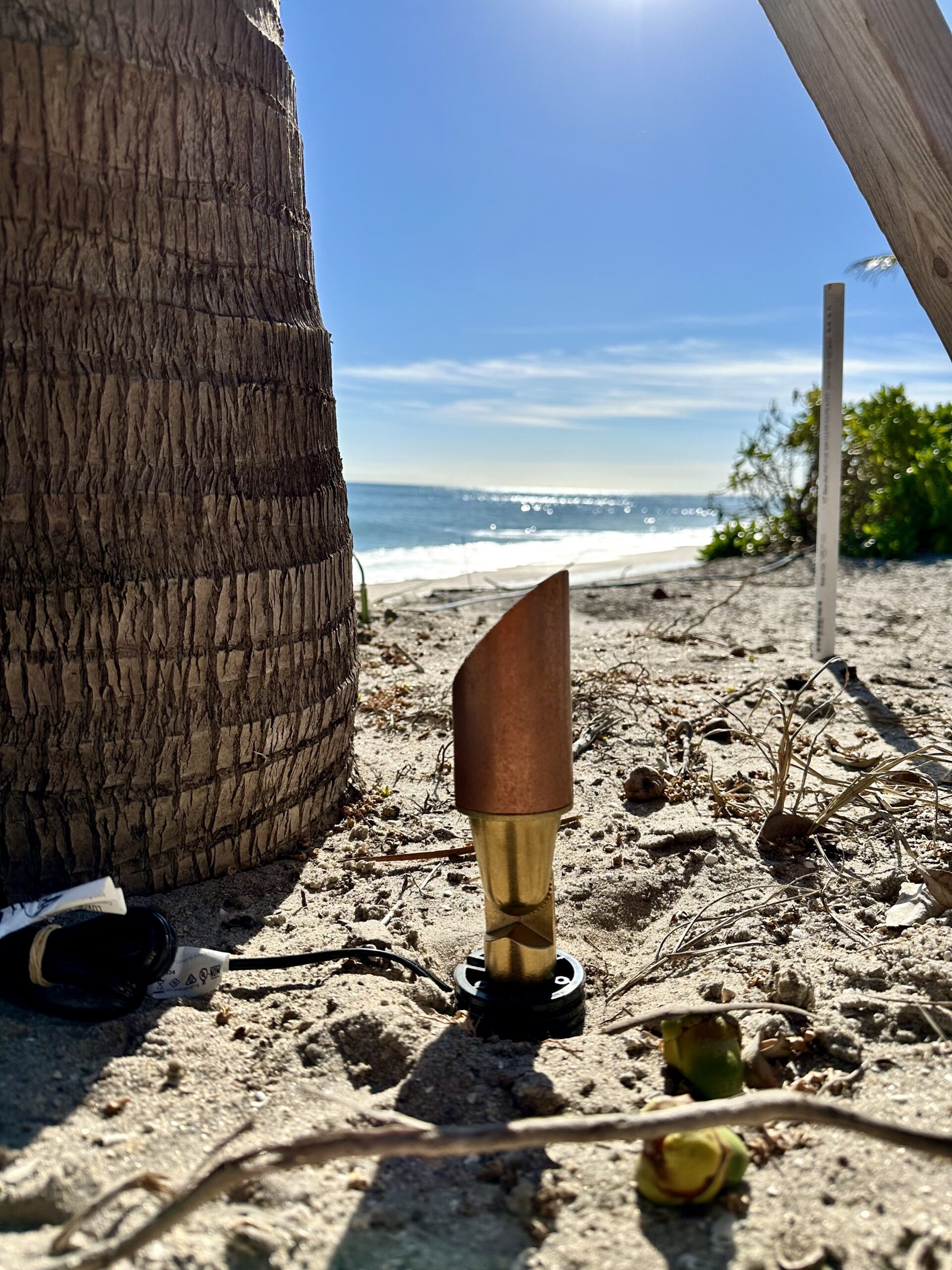
Coastal environments present challenges that aren’t always obvious at first. Where other climates contend with cold and ice, the primary concerns here are heat, humidity, and salt air, and of these, the Florida sun is often the most damaging factor when it comes to outdoor lighting fixtures.
Many fixtures available through general retailers simply aren’t designed for these conditions. Corrosion sets in, finishes fade, and failures come earlier than they should. It’s a frustrating outcome but an avoidable one.
Over the past decade, fixture quality has improved considerably, driven largely by feedback from designers and installers working in demanding coastal environments. The difference between a fixture that lasts and one that doesn’t often comes down to how honestly a manufacturer has considered where their product will actually live.
Coastal properties also contend with frequent storms, which adds another layer of consideration to any lighting design. Walkways, steps, and entrances deserve particular attention, especially on waterfront sites, or where ease of navigation after dark genuinely matters. Rather than defaulting to floodlights, a more considered approach uses controlled, well-aimed light: enough to orient and reassure, without overwhelming the space. Following dark-sky principles fits naturally here – it’s simply good practice, and on the coast, it matters.
Designing for coastal conditions means thinking about how a system will perform over time, not just how it looks after dark. Heat, humidity, salt air, and storms are constant. The goal is lighting that holds up against all of it and still feels calm, considered, and right for the space.